Tidbits of Arabic News translated into English

Showing posts with label Malak Jaafar. Show all posts

Friday, August 11, 2017

Oregon shooting from way back when

This news is from way back when - October 2015. Obama was still president, and there had been a shooting in Oregon. I think it was at a community college.

The BBC Arabic spent a lot of time talking about gun violence in the US. I think sometimes they like doing that, it gives them some relief from always reporting on misery in the Arab world.

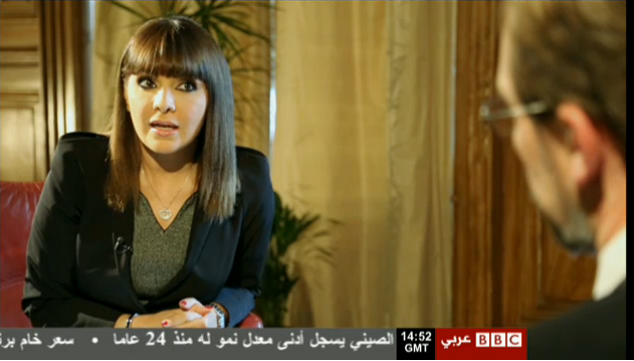
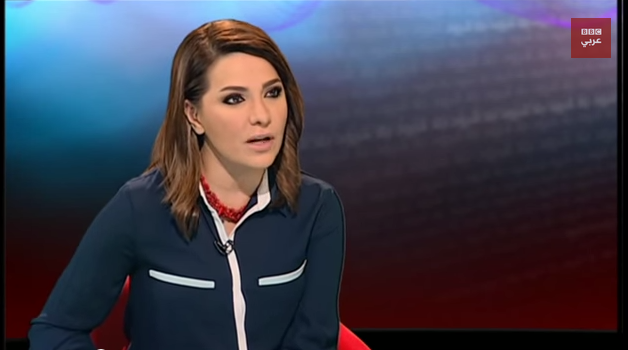
It was Malak Jaafar leading the conversation.


She started by saying: 1 million 400 people have died in gun violence, and that's more than all the wars, combined. (Did I record that correctly?).

Then she continued: after the shooting of 20 six and seven year olds in Connecticut, 5 million people signed up for the National Rifle Association. "That is strange!" muses Malak.

They showed a photo of Obama after the Connecticut shooting:


 Then they showed him now: Obama is really mad, Malak put in.

 Obama said (and the BBC Arabic translated): we have become numb. We should be shocked by all this.

They talked about how there are 300 million guns in the USA. Malak started stumbling over her words. "This ... is ... a ... a ... a scary number."

Malak pointed out that in Oregon, you can just walk into a store and buy a gun, and does this ease of access play a role? Or would people otherwise just get the guns on the black market. Not sure what the guest said about that.

The guest said: $3 trillion has been spent on wars because 3,000 Americans died; so why's nothing done about the great wave of gun violence?


"You know, in the US, it's the automatic weapons that you can get a hold of. And in fact, the US has more murders than Mexico, which is known for its guns."

Is that true?

Friday, June 19, 2015

Iraqi culture and Iraqi Jews

The BBC Arabic did a little dialogue at the end of May about the state of Iraqi arts and the cultural scene.

They are having a hard time because, as this man says, people like Daa-esh (ISIS) don't like things like music and books and art.


"The Middle East is crazy right now, culture is trying to defend itself from Daa-esh and all the militias."

And besides, there's been so much war and devastation it can be hard to think about pure, beautiful things. One of the Iraqis in the conversation said: 'Being cultured in Iraq is like combing your hair when you're bald'.

This is, I think, one of the scenes of devastation that makes it so hard to get beyond:


This man interviewed at a book market said that Iraqi arts have lost their voice. It has been affected by the religious and political challenges, and these days people are religious rather than exploring the cultural side of things.


Amazingly, they also interviewed a man from the Iraqi military. I didn't catch if this was just his philosophy, or if this is the official position of the Iraqi military, but he said that 'we need culture' in our lives, it's very important for our society.


And here is a concert that the military was holding:


And then they talked about how when there is so much war and unhappiness, people feel like they are being shallow if they enjoy music and art (again, like combing your hair when you're actually bald.)


People feel like they can't deal with cultural things, because it's so far below what is going on.

One old man said: I believe there's a group of young Iraqis trying to stay with music and books. I believe and trust in them, and that they can improve the politics.

The next day, the BBC Arabic was talking about Iraq again, this time about how there are so many divisions in society. So this old man came and was talking about how Iraq used to be, before the second World War:


He said that in those days, Iraq had many Jewish people among its population, and they lived in all parts of the country, from the north to the south. And they did not live in ghettos like in Europe. Other Iraqis would buy kosher from them. The Jews and the Muslims were living side by side.

But as we all know, these days are over; that ship has sailed.

Another person in the conversation was asked: do you think that Iraqi could go back to all the minorities living together in peace?

The answer: Yes, but not soon. Because Daa-esh has ruined things. It will need a long period of healing first.

Tuesday, March 10, 2015

BBC Arabic interview with UN High Commissioner for Human Rights

Malak Jaafar on the BBC Arabic interviewed the new UN High Commissioner for Human Rights. He is a Muslim and from Jordan, and people say he's very smart. But that means nothing at all when Malak is eyeballing you:


The name of the UN High Commissioner for Human Rights is Zeid Ra'ad al Hussein.

I caught the interview shortly after it started:

Mr. Zeid was talking about the attack on the French newspaper in Paris. He said: I condemned the attack. I also said the cartoons were insulting to Muslims. But an insult does that mean that we fight back in this violent way. It means that we fight back through our own freedom of speech. It's hard to find the line between freedom of speech and harassment through speech. Right now there are big marches against Islam in cities like Dresden, for example. We Muslims have to reach out and talk to these people.

Malak: So are you saying that Muslims are remiss in to entering into dialogue with the people in these demonstrations?

High Commissioner: Good question. After the attacks, there were strong condemnations from Arab governments. But so far, we have not seen big demonstrations against Daa-esh (the Arabic acronym for ISIS) or other brutal acts. This is strange. When the war broke out in Gaza, we saw demonstrations in Jordan every day against the war and against the attack. But there are no demonstrations against what Daa-esh is doing?

Malak: Why is that? Do you think it shows that people are actually in agreement with Daa-esh?

High Commissioner: By God ... There is no doubt that there is a political side in the Middle East that does like them. But when we read of the outrageous crimes against women, kids, sheikhs, it's hard to understand how we could have reached this point.

Malak: You and your predecessor Navi Pillay spent a lot of time speaking out. But what can you do beyond that?

High Commissioner: Well, we gather information from victims, we talk to people who were hurt. We gather the information and we give the information to the International Court, to the Security Council.

Malak: But you've been down that road before.

High Commissioner: Yes, yes, of course. At that point, the responsibility becomes that of the Security Council.

Malak: So basically, the upholding of human rights is completely political; it lies entirely within the politics playing out on the Security Council.

High Commissioner: Yes, this is true. But our agencies can still provide guidance, we can help provide solutions. Of course, we are often foiled ...

Malak: You make reports. How credible are they? People have said that your reports from Syria, for example, often depend on witnesses. A large amount of your reports depend on on-the-ground correspondents. [I guess Malak was suggesting that these are not always credible.]

High Commissioner: I am pretty certain that our information reflects what is happening on the ground. But I've also been clear that if anyone finds anything wrong in the report, they have to tell us. Maybe casualty numbers in the report are exaggerated. If you tell us, we will investigate.

Malak: Did you ever find mistakes before?

High Commissioner: Yes, of course. We're just people. But over all, I am certain that things are more often correct than not. Sometimes when we hear of demonstrations, we actually will hesitate to report them right away, because we want to fact-check first.

Malak: These reports have big numbers of casualties in them. Don't you think it would be good to do like the Red Cross does, which does not always point fingers about who is doing what and instead conveys that information quietly to the parties involved?

High Commissioner: Well, I think that about 60% of our work is done just with the concerned authorities. I think only about 20% ends up being done in public. So the majority of our work is about trying to help find a solution. But I'll give you an example. There was a government, we sent them a report. We wanted to hear an answer from them. But after a year, there was still no answer. So I told the head of the government that we cannot wait any longer, we will have to go to the press now. The very next day, I got a letter from them.

Malak: Were they afraid?

High Commissioner: Sometimes they are. We mostly try to work cooperatively with governments. We don't want to threaten.

The conversation then turned to the International Criminal Court.

Malak: Well, really, the role that the International Criminal Court can play in all this is absolutely stalled. We just saw how Omar Bashir's case was tossed. (Omar Bashir is the president of Sudan who was charged with genocide in Darfur, you can learn more about him here.)

High Commissioner: Listen, be patient with us. When the ICC was created, we knew that this was a project that would need a lot of time. We thought it might take 30 years. Because of course there's going to be regressions and obstacles.

Malak: So do you think it will be 30 years we can try Omar Bashir, Syria's president Assad and etc in the courts?

High Commissioner: My dear lady. Listen. When Charles Taylor left power in Liberia, there was an idea that he was going to escape all his crimes and charges, but things changed. He was sent to the Hague, he was tried, he's now in prison. So things can change. When Omar al Bashir's charges were dropped, we were very clear why. It was not because there is not a case, it's because we had no cooperation. Especially from the countries on the Security Council.

Malak: Right, it always comes back to the Security Council.

High Commissioner: Right, so we need to keep putting pressure on these countries. And Arab countries are full of blood, bloods of innocents, of violations of women and children. We just cannot keep on this way!

Malak: Well, there's a movement that says: while war crimes are not condoned amongst the average Arab, there's  a whole different idea of what children's rights and women's rights should look like. So what do you think about that?

High Commissioner: Well... [And I don't think I understood what he said. Except for one bit:] In Jordan, for example, the other day eleven people were sentenced to death and executed. And I sent them my grievances about it. When I talk to NGOs in Arab countries, to Arab civil society, I found that there were ??? ... When we talk about what's happening in Yemen, in Libya, in Iraq, in Syria ... the temporary visas given to people ... there's frictions, but in general, we all hope for progress. We always hear about what is happening in South Sudan, or Mali, and as the years pass, we feel as though ... [he was just big words that I don't know.]

And so the half hour ended.


Sunday, December 14, 2014

A politician from Sweden on the Arabic News

I managed to listen to the BBC Arabic for maybe two hours total this past month, and just by luck, I caught an interview with a Swedish politician.

Her name is Abir Al-Sahlani, and she was interviewed by Malak Jaafar in mid-November:


Abir Al-Sahlani

Malak is always a very tough interviewer, so she started out by asking about some corruption charges that Ms. Abir had faced in Sweden. It was a charge she had been cleared of, but it looks like it cost Ms. Abir the chance to run for office during the last election this summer. 

Abir: I was cleared of the charges, but I decided not to run I knew the whole campaign would focus on this one issue, and I didn't want to deal with that.

Malak asked if there had been a conspiracy in the Center Party (to which Ms. Abir belongs) against her, or if they had been split over how to deal with her.

Abir: There's always opposition when you're a politician; and sometimes it's opposition with integrity, and sometimes it's opposition without integrity. I believe I faced opposition without integrity.

Malak: From who?

Abir: From people who did not want me to have a voice in the government, including people within the party. I think I annoy a lot of people inside the party, and in Sweden, and in the Arab world, too.

Malak: does the chief of the Center Party not really care for you?

Malak's sharp eyes don't miss much

Abir: No, I consider the head of the party to be my personal friend, and it's not entirely her decision, anyways. In a country like Sweden, in which there's been no wars for about 300 years, the political system is very structured and organized. Decision-making is not very centrally-controlled. Even lower-level party members have a say, and so do committees. So it's not necessarily the head of the party who decides all things.

Malak: So, what remains of your role in the Center Party? Have you been frozen out?

Abir: Not at all. I am on the Leadership Council for the party, on which there's only 21 members. And I'm the representative in the party for Stockholm.

Malak: But still, you gave in and didn't run for Parliament.

 Ms. Abir thinking about her battles

Abir: Well, I sometimes think: not all battles have to be mine to fight. I'm a person, and I have a certain amount of energy. I need to put that energy into battles where there's a bigger chance I might win.

Malak: And what are your battles?

Abir: Mostly equality between people. I don't like for people to look at me and think: oh, she's weak. Oh, we need to feel sorry for her. Of course, it's true that I met with tragedy as a child. My parents were politicians in Iraq. I attended political meetings while in my mother's womb, and when I was a year and a half old, I was threatened with assassination from my parents' political enemies.

[Iraq, you make me proud every time!]

Abir continues: As a 15-year-old child, I left Iraq all on my own, without family. I came to Sweden, and by the time I was 16, I had taken on the responsibility and succeeded in gathering all my family there. Otherwise, we would never have been able to live all together. But, I want people not just to focus on all this, I want to show that I'm stronger, that I am capable, that I accomplish. I want to break the idea of Middle Eastern women as a pitiful victim.

Then Malak brought up Abir's failed campaign to win a seat in the Iraqi parliament back in 2004. Abir explained: she had spent very little time on the ground in Iraq prior to that. A proper campaign would have been interacting with people and earning their trust. But she did not have a chance to do that, and she cannot expect that people are going to vote for her just because her name is on the ballot.

Then they went into a whole discussion of post-war Iraq in 2003/2004 and what went wrong, and Abir says: maybe Saudi and Iran didn't really want democracy in Iraq, and maybe Turkey and Syria, too, maybe no one wanted democracy to succeed in Iraq, and the Americans made mistakes and ...

But I'm going to skip the rest of that, and pick back up where Malak asks the question you always always have to ask someone who grew up between two different cultures:

Malak: People say that in Iraq, you have become a stranger, having lived for so long apart from the country. And in Sweden, people view you as a refugee. You talk a lot about integration. Do you feel as though wherever you go, you will not be able to properly fit in, whether in Iraq or in Sweden?

Abir: Where should I go, the moon? I am a product of Iraq. I am Iraqi. I am a product of the Middle East. That is the reality. That is our situation. I didn't come from the moon. When I see mothers who send their children to school, only for them to die there from violence, I feel for that mother, whether she is Iraqi or Somali or Tajiki. It doesn't matter. But when we are talking about democracy, this is experience, and it is not an insult to any country, or any religion, or any group of people. I think these are values that all people hold dear. And Inshallah anyone from the outside can come to Iraq and maybe fix our problems, whoever it maybe be, just let the problems get fixed.

Malak: But it's still true that people want to vote for someone who looks like them, and has the same shared experience. So was your path to politics within the Center Party of Sweden driven by just Iraqis living in Sweden who voted for you?

Abir: Not really. There's not a lot of Iraqis in the Center Party. Let me repeat, I stand for liberal values, for democracy, for humanity, and maybe voters, whether they were Swedish or Iraqi, identified with that and that's how I got voted in and that's what I represent.

Then they started talking about integration. I really really really loved what she said at this point, so much, that I would have started shouting, except for I was in the office.

Abir said: When I talk about integration of immigrants in Sweden, I don't mean it in the sense of I have to change culturally. I just mean that I should be a part of Swedish politics, a part of Swedish civil society. It doesn't have anything to do with starting to eat pork, or starting to drink, or wearing skimpy clothes, or naming your kids Karin or Ester, because those things anyways do not really define Swedish society. Swedish society is much richer than that. Swedish society is humanity. It's the equality between man and woman. It's that there's no difference between whether you're white or black or blonde or dark or red. It's that you have a right in this society, and that you can live your life in all its ways, inside of the laws.


More good things about Sweden!

And I (me, not Abir) just want to add that actually, plenty of Muslims drink alcohol; and I always dislike it when we look at the west and say, oh, look how different they are, and what weird customs they have, when the same exact stuff is happening in Arab countries. As for being blonde, I have a cousin who's blonde. There are Arabs who are blonde. Not brilliant sun-shine blonde, but soft honey blonde. And, as for names: I also have a cousin named Cinderella (no joke). And I knew a Muslim Syrian girl here in the US who was named Suzanne. And I met a Muslim girl in Jordan who was named Sally. They both wore hijabs and were very proud Arabs. So even the names don't really mean much anymore. 

I met a Swedish girl in Jordan who was called Karin, and she was so nice, and so sweet, and so open to inviting people over to her place. And she was doing tons of activities with kids. Why shouldn't an Arab or a Muslim called their daughter Karin after the Karin I met in Jordan?

Back to the interview. I think Malak's next question was something like: you are a Muslim woman, and the Swedish Center Party was just using you as a face to prove that they were welcoming of immigrants, but otherwise, they don't really get any use out of you.

Malak and her piercing eyes

Abir said: no, I don't let anyone to use me in any way. I act for myself. I have Swedish voters who vote for me. In the 2009 elections for the European Parliament I received over 7000 votes just for me, Abir, not for the Center Party. Of course, I am Iraqi, and Arab, and Muslim, and all of that; I am not ashamed of being an immigrant. But first and foremost, I am Abir.

Malak: Tell me about the second generation Muslims growing up in Europe and who are going to fight with Da-esh (or ISIS) in Iraq and Syria.

Abir: I think those kids are lacking in identity, both inside society and inside their families. I think that a lot of those kids probably have had to take on the roles of parenting their parents. By leaving Europe, these kids gave up democracy, freedom, and respect. I think a lot of them were searching for an identity, and they went to mosques to find this identity, and some of those mosques likely have extremist views.

Malak: You know, a lot of those kids don't even think that their home countries in Europe are democratic or free.

Abir: Sure, when I talk about integration, I don't just talk about what immigrants have to do, but I also ask for governments and countries to open up space and room for these immigrants. People have to realize that tax-paying and law-abiding people are not just white. In fact, tax-paying and law-abiding people might look just like me. Or it might be a lady wearing a hijab or a man with a beard wearing a dishdasha. All of those people might follow the law, too. Most of us are like that.

Abir lays out her points

Malak: On to a new topic. In western countries, there's a very bad image of Islam these days. Why can't people like you, who are in politics and have a voice, try to change this picture?

Abir: Really, I have tried to promote dialogue about Islam. We are lacking this. Everyone has their own opinion and has an opinion, and is quick to accuse others of things. I asked the Islamic leaders in Sweden to clarify their positions regarding Da-esh, or ISIS, in Syria and Iraq. They're the leaders, so why not give their clear positions. I experienced a very negative response. They said: why do we Muslims always have to clarify our positions every time something happens? So I think there's two issues. One is, we Muslims always find ourselves accused of things, and that is hard to deal with. Secondly, I don't think they have a good idea of what it means to be a leader. If you are a leader, then you have a responsibility. I gave them an example. I told them that as immigrants, you want all the political parties in Sweden to say that we are not going to be against immigrants. You want them all to be very clear about what their position is. This principle applies just the same way to you. You are leaders, so you have to state your positions. 

Another thing: Muslims in the west always feel accused and oppressed. Why? How can we solve that problem? I said: why can't we Muslims in Sweden decide on a Swedish Islam? Could we decide what is right and what would work best for us? I didn't suggest that we should become very different. But I was told: no, we can't do this. But why? To me, this is crucial. 

Malak: Do you think that there should be a British Islam and French Islam and a Swedish Islam?

Abir: I don't mean that precisely. I just mean that we should have more than just a single school of Islam, which right now is the Wahabi school setting the standards. We should have a dialogue about these things.

Malak: In Swedish mosques, do you sense that there are certain people bankrolling the building and running of the mosques, and that the views of those people end up being promoted.

Abir: I can tell you one thing at least: I used to go to Friday prayers in the biggest mosque in Sweden. They would always say: pray for the martyrs in Gaza. But when it comes to Iraq, they never said pray for the martyrs in Iraq. They would just say: Iraqis are killing each other. Why in Gaza are they martyrs, and why in Iraq are they not?

Malak: And what do you think the reason for that is?

Abir: Sectarianism. (By which I think she means the big Shia-Sunni fight.)

And thus ended a Swedish politician's turn on the BBC Arabic. How exciting! You can watch the full interview by clicking here (it will take you to the video on the BBC Arabic's YouTube page.)


Monday, November 10, 2014

Malak is back

One of my favorite BBC Arabic presenters - she's finally back. I had not seen her in a while.


Always good when Malak is around. She puts everyone in their place who needs putting in place!

Sunday, June 15, 2014

Child Rape in Sudan

Back in March or April, the BBC Arabic did a report on child rape in Sudan.

The hard questions were asked by Malak Jaafar:

 Malak Jaafar

Malak spoke with two guests via telephone or video. The sound was blurry, or maybe I am unused to the Sudanese accent, so I only caught bits and pieces. 
One of the guests was called Mr. Suliman. He represented Sudan's government. The other guest was Ms. Amil. She is an activist for children's rights. 

Mr. Suliman started off by saying, in response to one of Malak's questions: No, we do not treat rape victims as adulterers. We are talking about a nine-year-old girl who's been raped. 

Then he mentioned a special law that protects kids. 

Malak turned next to Ms. Amil. 

Malak: if a child has been raped, what happens when the parents turn to the courts or try to find lawyers?

Ms. Amil: they face many problems. 

But I didn't catch the details. I only caught her saying that before the new law was passed in 2010, a rapist's punishment could not exceed a seven-year jail term, and a 14-year-old girl who had been raped was tried for adultery. 

Ms. Amil said that rapists were protected by societal norms, or something like that. 

Malak: but how can you claim society protects the rapists? Mr. Suliman said the law does not protect rape, nor does it allow girls to be tried for adultery. How does the law get twisted around from its original intent?

Whatever Ms. Amil said, I didn't understand. 

Then Malak turned back to Mr. Suliman. 

Malak: There have been 3000 cases of child rape recorded by the courts (I didn't catch the time period referenced.) Why is this number on the rise?

Suliman: Sound too blurry. I think he said: you can't trust those numbers, and we've taken many protective measures. 

Malak: so you doubt the numbers from your courts?

Suliman: no!

Malak: you know, Suliman, if there's hundreds of rape cases recorded, that means there's many more that go unrecorded because parents are afraid their daughters will get a bad reputation. This happens in conservative societies like Sudan. So what guarantees do parents get that they can go to the courts and be treated fairly?

Suliman: ehhhhhhhhhhhhhhhhhhhhhh.

Saturday, March 15, 2014

Syrian refugees

(March 11, 2014)

It's been three years since the start of the Syrian War, so the BBC Arabic's Rasha Qandeel was talking about refugees.

First, they showed footage of camps and of schools:


Then Rasha spoke with a lady who had fled Syria for Lebanon three years ago via telephone. Her name was Mother of Khaled. They didn't have a picture to show of the Syrian lady, so the camera studied Rasha's concerned face instead.


The Syrian Mother of Khaled lady had given birth to a child three years ago, just as she was fleeing her home country. She said that in all that time, they had been given no support out of anyone. Also, her family numbered in the dozens, or close to a dozen, and the only person earning any wage was her brother. 

In the meantime, I think the peace talks are not going so well. In February, when the peace talks were breaking down, the BBC Arabic's Malak Jaafar interviewed this Syrian guy. He was giving his version of events and blaming everyone else, when finally Malak told him: you talk as if the failure of the Geneva talks is the fault of the international community and not yours at all.

Looks like there's plenty of blame and pity to be shared.

Thursday, February 13, 2014

Lebanese priorities

(February 13, 2014)

Topless pictures have been revealed of a Lebanese female Olympian at the Sochi games. The name of the athlete is Jackie Chamoun.

The BBC Arabic's Malak Jaafar announced she was going to do an in-depth segment about it, which surprised me. This sounded like such a fluffy, entertainment story to me.

Little did I know.

I think that Malak Jaafar herself is Lebanese. First, she ran a clip of a Lebanese woman saying: All the newspapers, radios, television stations have Jackie Chamoun plastered all over them. Meanwhile, we have bombs going off all the time, and women are being attacked. And we have three pages in the newspaper dedicated to Jackie Chamoun!

Some people in Lebanon are upset, because they have family values and don't want a woman with naked pictures representing them. If a naked picture is released of one Lebanese woman, then people get to thinking all Lebanese women are like that, and that is a troubling idea if you want to be modest.

Other people in Lebanon think that Ms. Chamoun can express herself as she wishes. So Malak showed footage from a photo shoot arranged by some young Lebanese. They were stripping in support of Jackie Chamoun. I don't think that's such a good idea. They are definitely not going to get the conservative, family values types people to respect them any more that way.

And the last clip that Malak showed was of a car. Just an ordinary car found in Lebanon today, and packed full of explosives. But I think they caught it before it went off.

Malak ended with: some people say it is really strange that everyone is concerned with Jackie Chamoun when exploding cars are being rigged up.

Then, it was time for discussion. Malak had this man on via video link to Beirut:


Malak asked him: The Lebanese tourism ministry has always promoted Lebanon by showing women in scanty bathing suits on the beach. You can see images like this in all the promotional videos the ministry publicizes. This is public information, and the images are presented as a stereotypical image of Lebanese women. These images also represent Lebanese women in an immodest way. So why is there all of a sudden an uproar now that Jackie Chamoun has done the same thing, albeit through a personal whim rather than through official tourism videos?

Man in Beirut: You know, that's a different problem, because it's also not a good thing for the tourism ministry to be showcasing women's bodies in that way, trying to use that to attract visitors.

Malak: Yes, but why is the country upset over Jackie when the tourism films are full of the same thing? They've been making films like that since the 70s.

Man in Beirut: I don't know what he said.

Malak: There's very religious people in Lebanon, and then there's more liberal people who don't see anything wrong with a beautiful, athletic woman doing what she wants. How can the country be reconciled with such a crisis in opposing opinions.

Man in Beirut: no, yes! Yes, there's different opinions, but everyone in Lebanon understands that you respect other people's choices, and that's different from other Arab countries, and that's why Lebanon is so much better and it has been like this for decades!

Malak: right, so with all the explosions and crises in Lebanon, and the other day a wife was killed by her husband, why are we focusing on this topic?

Man in Beirut: my dear Malak, your question is set up for the answer. Obviously, it is all a little strange!


Saturday, February 8, 2014

Sochi's past

(February 6, 2014)

The BBC Arabic wasn't as bad as some news sites - they didn't go on and on about the Fifth Ring That Wasn't at Russia's Opening Ceremony. They only showed footage of the perfectly synchronized fireworks.


The day before, however, the BBC Arabic under presenter Malak Jaafar did a segment about the ethnic cleansing of the Circassians. The Circassians used to live in Sochi until they were kicked out, and now they are not allowed to return home. More than 90% of them now live outside of Russia.

Here they are campaigning for their rights:


So Malak put a stern question to an Arabic-speaking Russian, or an Arab guy living in Moscow, and he said:

First of all, you are talking about 19th century history. Sorry about that. If that's the case, then we can talk about what the British and French did as occupiers and colonizers as well.

Arab-speaking man in Moscow

Malak: But unlike the French and British, you never pulled back from Sochi; you've never allowed the Circassians to return to their homeland.

Russian guy: Sure, that's what all the distorted western journalists say. We know about the voices out there, but the Circassians who are still living in Russia are happy! So there.

Malak: of course, that's obvious, because most of the Circassians have been kicked out of their homes, so the ones remaining are sure to publicly agree with the current government.

Russian guy: looks taken aback.

Then, Malak spoke with a Circassian man currently living in Frankfort, Germany. He was speaking via Skype. That man said: Russia has banned all the Circassians from even traveling to Sochi. We can't even visit. We want Russia to grant us visas.


In Arabic, the "Circassians" is pronounced as al-Sherkis.

Friday, February 7, 2014

What happens when girls ride donkeys?

(February 7, 2014)

Every so often, the BBC Arabic does a segment about female circumcision. It is called al-khitaan in Arabic. Today, this was induced by a UNCEF report that came out.

BBC Arabic presenter Malak Jaafar was directing.

 Malak and UNICEF

First, they showed which Arabic countries had landed on the report. Iraq was on the list with the lowest rate of female cutting (8%). Well, I think most Arab countries have a rate close to zero, but this report just ranked countries with a problem.


Next came Yemen, with 23%. Yemen passed a law against al-khitaan in 2001:

And you thought you couldn't read Arabic!

Next came Sudan:

Egypt, always causing trouble, where 91% of women are cut, although a law was passed against it in 2008. Malak discussed that later with an Egyptian doctor ...

 And Somalia, with a 98% rate.

Egypt was the focus for the rest of the segment. Malak showed some opinions of random people on the Egyptian street, mostly men, and all of whom said the 2008 law against FGM needs better enforcement.

And then, Malak did an interview with a twinkly-eyed Egyptian doctor, who was a riot:


 Basically the bluntest conversation I've heard on the BBC Arabic, so blunt I blush to transcribe it all.

Malak asked something like: why is female circumcision so prevalent in African nations?

Egyptian doctor: it's not because they're Black! It's because of the old ways of patriarchy.

Malak: In Islam, men can marry four wives, but women can marry only one man. Isn't al-khitaan just another way that Islam controls women?

Egyptian doctor: No! It is not about Islam. In Judaism, female circumcision is written into the Torah [I don't know if that's true]. There are Christian Copts here in Egypt, and they practice al-khitaan. They're Christian, not Muslim!

Malak: your activism against al-khitaan is such a liberal idea. Don't you get push-back when you go to rural villages and try to convince them not to cut their daughters?


Egyptian doctor: actually, we can talk to them about it. They tell us, "if we don't cut our girls, it will open up a can of worms: because, we don't want our girls to ride donkeys and feel any sort of anything." So we tell them, "when boys ride donkeys, don't they feel something? and therefore, why don't we cut them?"

Continues: Then the villagers we speak with say, "oh!"

Malak: well, if there's a law in Egypt against al-khitaan, why is it that 91% of the female population is cut (and this figure has been steadily increasing.)

Egyptian doctor: the law is just symbolic, something the government did to shut up the international community. It's been this way ever since Sadat and Mubarak. I've been blocked many times from speaking about the bad effects of female cutting on TV. My books have been banned. I was kicked out of the Health Ministry [I think that's what she said] because I spoke out about it!


Sunday, February 2, 2014

Sieges in Syria

(January 28, 2014)

Nearly every day this week, the BBC Arabic broke off to show the live press conferences about Syria. Luckily, the man giving the statements (Lakhdar Brahimi) has a very nice, calm, soothing voice, so that was okay.  Even though he is a native Arab speaker, he often gave his remarks in English, so the translator would jump in. The BBC Arabic translator also has a nice voice, so even that was okay!

I think Mr. Brahimi must be very respected, because after one of the conferences, all the reporters jumped up and wanted to shake his hand.

There was always someone sitting next to him at the top table, to be in charge of who asked the next question. This lady is one of them. Do you think she is Swedish? I don't. I think she looks German. Or she might be something completely different. But on the off-chance she's from my favorite place, I thought I wanted to grab a screenshot of her.


They also showed us a random shot of a UN guard during the conference. He looks very sober and grave.

Some days, they kept saying, "okay, and the last question will go to..." but once that question was answered, they'd take another question anyways.

Mr. Brahimi was giving press conferences because he is the lead mediator trying to reconcile the Syrian government and the Syrian opposition. And they had a big meeting all this week in Geneva. 

After the press conferences, the BBC Arabic would go into analysis.

The Syrian government media person would say things like:
Brahimi always what the other countries want him to say. He is not the Quran! He says one thing one day, and something opposite the next.

Or maybe the government spokesperson would say:
How are we supposed to allow humanitarian aid into the besieged areas when we've seen the Red Cross/Red Crescent perform hundreds of terrorist acts under this pretence!

Of course, the Syrian opposition was also interviewed, and they would say something entirely different. They said things like: yes, the esteemed guest from Damascus who is trying to call me a terrorist, that is their way of having etiquette, of course ... 

One of the issues the opposition and the government were trying to negotiate about were all the besieged places in Syria where people are dying of hunger. The Syrian government has surrounded these areas in order to strangle and choke off the fighters inside, but there's lots of women and children in those areas as well. Apparently, the Syrian government wanted the names of all the women and children to be printed out in a list, before they allow them out.

The opposition interviewed by the BBC Arabic said:
First, the government asked for lists of the people who want to leave the siege. But there's other people who don't want to leave their homes! About them the government said: if you are a terrorist, we will not allow one ounce of food to reach you!

This was the opposition guy, live from Geneva, where the negotiations took place.


Malak Jaafar of the BBC Arabic was doing this interview, and she asked:
So what's the problem with making those lists of names? Make the list, and then the people who want to leave can do so.

Opposition man:
Because the government calls all of them terrorists! They say the kids are all spies and the women are something else, and that they will be taken away and never allowed back into their homes. 

So Malak turned back to the government guy and asked him to respond. Says the government guy:
What the opposition man says is wrong! We want to do everything above-board. If you are so concerned with the humanitarian side of things, then why did you let Erdogan do something and something else ... no idea what he's talking about.

Malak:  
no, that's another matter entirely, you always take us off-topic. 

Government man:
oh Malak, oh Malak, oh Malak, my lady, oh Malak ....

Malak:
You're not doing things to build trust!

Government man smirks and says:
If any person inside the siege left and went to any of the army checkpoints, they would immediately give them food and water. We provide electricity and everything to everyone! If we really wanted to inflict suffering, we would have cut off the electricity long ago!

Here is the government guy:

And here is the whole scenario, with Malak in the middle. 
 I did not mean to get a shot of her with her eyes closed! This is in the heat of the action, with the government guy and the opposition guy yelling at each other, for all that they are thousands of miles apart.

The siege they are talking about is the one happening in the Syrian city of Homs.

Malak did lots of interviews with Syrians this week, each keen to say their side has the moral high ground. She spoke to an evil-faced man representing the government, though he was speaking live from Washington, DC. 

He says: the UN has no authority to intervene in Syria. The UN can only intervene in matters of global security. The real problem is terrorism!

Malak: you're the ones with the big weapons - tanks, shells.

Government guy: well, I'm talking about priorities, which is terrorism, which is a global priority, and which we have to stop.

Malak: if you really don't want the terrorists, then go after the terrorist groups; but why are you attacking the Free Syrian Army?

Government guy: not sure what he said, except he thought the nuances of the situation were very clear, and if you don't see it the way he does, you're stupid.

Yarmouk

(January 30, 2014)

There is a Palestinian refugee camp in Syria that has been under siege for six months. No one can get in or out. It is in the middle of a fight between the Syrian rebellion and the Syrian army. The place is called 'Yarmouk'.

Lots of people in Yarmouk are starving to death. On January 30, a cease-fire was arranged at 4 p.m., so that UN workers could bring some food over. Malak Jaafar, BBC Arabic presenter, interviewed some of the people involved.


These are pictures of families rushing out to the collection place. However, the UN person that Malak spoke to said that they only had food to feed 1620 families, and that this is just a drop in the bucket.

This is Malak interviewing the UN man. He works for UNRWA - the UN Relief and Works Agency which is specifically designed to help Palestinians. He said that the UNRWA doctors saw a lot of disease, and that's there is lot of trauma besides physical sickness.

In order to get the food in, I think that maybe a humanitarian corridor was opened up, but the UNRWA man said: we don't need that. We need constant access!

 These ladies from Yarmouk say: everyone's hungry, there's no food.

Funerals for people who died of starvation or maybe of an illness resulting from starvation. I think they were saying that one or two people die of hunger in this camp every day.

Malak also spoke to another Palestinian official who helped arrange the cease-fire. He said that the shipment of food included bread and children's milk, and that 43 very sick people were taken out of the camp.

He further said that the Syrian government did everything it could to cooperate, helped out a lot, and helped to arrange for the aid to be sent in, but that there's people from the Free Syrian Army and terrorist groups in the camp hampering the progress.

He said: there were 16 groups connected to the camp, both Palestinian and Syrian groups. They needed all of them to sign a paper to agree to the cease-fire, but only 11 of the groups did.

Malak asked: do we know who those other five groups are?

The Palestinian official said: three are from al-Qaeda, with names like al-Nusra, Da-ash, and something else. Then there is a group called Jibhet Islamiya and one more.

Malak asked: if you needed to get in touch with those obstinate groups to arrange a cease-fire again in the future, can you do it?

The Palestinian official said: we have people at all times in the camp talking to all the groups. We do this because we don't want the siege to continue. 

He also said that during the food distribution, there was firing of gunfire, and one of the people living in the camp, who volunteered to help out, was killed.

Malak asked: and the gunfire came from where?

And he said: from the direction of the armed groups.

Definitely lots and lots of perspectives on this, but I like the BBC Arabic because you really hear from a wide range of people.