I was busy working, sound muted, but the BBC Arabic open on my computer. A very friendly looking man was being interviewed, and they were showing photos of peaceful drawings:
That's supposed to say peace.
Then, I saw a photo of a bunch of kids and bright colors, so I finally put headphones on to see what was going on:
Turns out it's a restaurant owned by an Israeli man with a Palestinian chef. He claimed there were many such restaurants in Israel, and that all the kids of different backgrounds come to eat and talk together.
Here's the man.
Showing posts with label Palestine. Show all posts
Thursday, October 1, 2015
Sunday, August 2, 2015
The Baby Burned in Palestine
The BBC Arabic with Rasha Qandeel had a discussion about a baby burned to death in Palestine by some Israeli settlers.
Here is the baby:
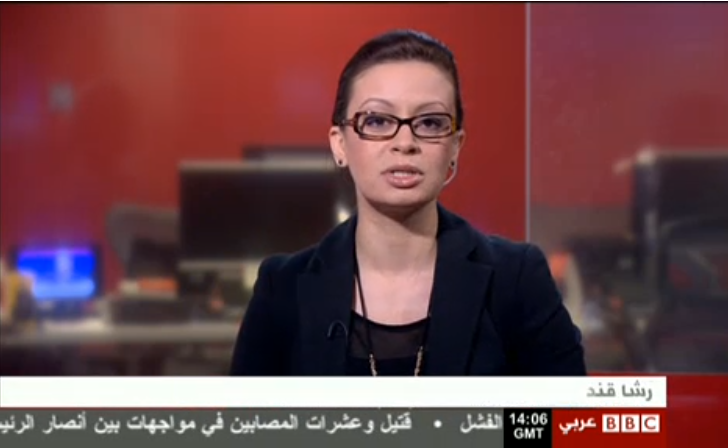
This is Rasha Qandeel:
This is actually a picture from a year ago, or maybe more. But I didn't get a chance to take her picture today.
First, they had a clip about the reaction in Israel. There have been big protests by those on the left against what happened, as you can witness by the grim face of this Israel man:
From the pictures, the protests look pretty big:
This Israeli man said: as long as we continue occupying Palestine, we will see crimes like this happen.
And people expressed hope that this would lead to more attention paid to the anti-settler movement, and this man spoke at the protest and said: Mr. Prime Minister, we suggest that you treat Jewish terrorists in the exact same way that you treat Islamic ones.
The Israeli prime minister did condemn what happened; but that made a lot of the right-wing Israelis really mad:
So then it was time for Rasha Qandeel to talk to her guests:
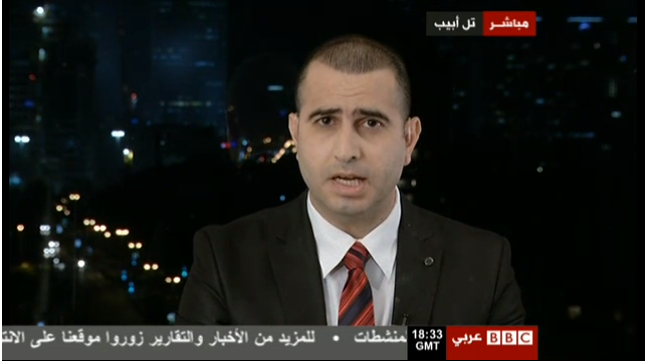
She was talking to two people, one in a place called Nasariya, and one in Tel Aviv. But her time was mostly taken up by the guy in Tel Aviv, because he wouldn't stop talking. He was Israeli, but man, he looked Arab!
Tel Aviv man: If there is terrorism - and this was obviously terrorism - then it shouldn't matter who did it. And if there's a need to outlaw Jewish terrorism, then we should do it. But don't take this tragic situation and use it for a political reason. This was an attack that individuals did. As far as organized terrorism in the Middle East, then that only exists in the form of Palestinian terrorism. While this death is very tragic, still don't bring in the political stuff, because as a whole, there is only one party that stands for peace and that is us, the Israelis. The other side is not for peace.
Then Rasha Qandeel asked him if the burning death of this baby wasn't an indication of many Israelis who would like to commit similar acts, but the Tel Aviv Man cut her off: this was an individual act!
Rasha Qandeel: This baby was just killed. A boy called Mohammed was killed a few days ago (?). Three years ago, there was a terrible murder of a Palestinian by an Israeli, and the Israeli man was sentenced to 22 years in prison. However, he was just released a few weeks ago. So tell what's the difference between Palestinian and Israeli terrorism?
Tel Aviv Man: I'll tell you the difference. Israeli society stands against these acts, while the Palestinians are for such acts. They declare those that fight against Israel are heroes.
Then he wouldn't stop talking.
But finally, Rasha got a word in: You know, the Israeli Prime Minister himself just said that these Jewish terrorists are receiving help to commit these acts.
And then Rasha listed a lot of other Israeli politicians who had said similar things, and then she said that one of the Israeli politicians had even called this the rise of the Jewish Daaesh (ISIS).
Then she turned to her other guest. His names was something like Rab Zinger:
Zinger said: An Israeli politician called Rabin, who is on the right, spoke out against this act; and in response, Rabin is being called a terrorist himself by right-wing Israelis, just because he is standing with innocent Palestinians. There's a lot of talk among the politicians now that they will have to start using the same tactics against Jewish terrorists as they use against Palestinian terrorists. It is a new day for Israeli security.
Rasha asked the man from Tel Aviv: So, what has Netanyahu (the Israeli Prime Minister) done to deal with Israeli terrorism over the last 10 years?
Tel Aviv Man: Well, Israel is a democracy, we have free speech and free dialogue, and I depend on the Israeli police and the government. But Israel is not a racist country or a terrorist country, and this is what the leftist Israelis have been saying. This is not good for our country.
Rasha: My question was clear. What are the measures Netanyahu has taken against Israeli terrorism, or what has his dialogue been with the Israeli democracy on this front?
Tel Aviv Man: Yes, and I'm also proud of all of it. If there is a need to take measures against Jewish militias, then we will take those measures. But we should not connect this to the stoppage of building settlements (?). We should not mix up the political to this tragic, heinous thing.
Then he started yelling and wouldn't stop.
Rasha: so I hear you saying that you'd welcome such measures against Israeli terrorists, but that they don't exist yet. Thank you for your time anyways.
Here is the baby:
This is Rasha Qandeel:
This is actually a picture from a year ago, or maybe more. But I didn't get a chance to take her picture today.
First, they had a clip about the reaction in Israel. There have been big protests by those on the left against what happened, as you can witness by the grim face of this Israel man:
From the pictures, the protests look pretty big:
This Israeli man said: as long as we continue occupying Palestine, we will see crimes like this happen.
And people expressed hope that this would lead to more attention paid to the anti-settler movement, and this man spoke at the protest and said: Mr. Prime Minister, we suggest that you treat Jewish terrorists in the exact same way that you treat Islamic ones.
The Israeli prime minister did condemn what happened; but that made a lot of the right-wing Israelis really mad:
So then it was time for Rasha Qandeel to talk to her guests:
She was talking to two people, one in a place called Nasariya, and one in Tel Aviv. But her time was mostly taken up by the guy in Tel Aviv, because he wouldn't stop talking. He was Israeli, but man, he looked Arab!
Tel Aviv man: If there is terrorism - and this was obviously terrorism - then it shouldn't matter who did it. And if there's a need to outlaw Jewish terrorism, then we should do it. But don't take this tragic situation and use it for a political reason. This was an attack that individuals did. As far as organized terrorism in the Middle East, then that only exists in the form of Palestinian terrorism. While this death is very tragic, still don't bring in the political stuff, because as a whole, there is only one party that stands for peace and that is us, the Israelis. The other side is not for peace.
Then Rasha Qandeel asked him if the burning death of this baby wasn't an indication of many Israelis who would like to commit similar acts, but the Tel Aviv Man cut her off: this was an individual act!
Rasha Qandeel: This baby was just killed. A boy called Mohammed was killed a few days ago (?). Three years ago, there was a terrible murder of a Palestinian by an Israeli, and the Israeli man was sentenced to 22 years in prison. However, he was just released a few weeks ago. So tell what's the difference between Palestinian and Israeli terrorism?
Tel Aviv Man: I'll tell you the difference. Israeli society stands against these acts, while the Palestinians are for such acts. They declare those that fight against Israel are heroes.
Then he wouldn't stop talking.
But finally, Rasha got a word in: You know, the Israeli Prime Minister himself just said that these Jewish terrorists are receiving help to commit these acts.
And then Rasha listed a lot of other Israeli politicians who had said similar things, and then she said that one of the Israeli politicians had even called this the rise of the Jewish Daaesh (ISIS).
Then she turned to her other guest. His names was something like Rab Zinger:
Zinger said: An Israeli politician called Rabin, who is on the right, spoke out against this act; and in response, Rabin is being called a terrorist himself by right-wing Israelis, just because he is standing with innocent Palestinians. There's a lot of talk among the politicians now that they will have to start using the same tactics against Jewish terrorists as they use against Palestinian terrorists. It is a new day for Israeli security.
Rasha asked the man from Tel Aviv: So, what has Netanyahu (the Israeli Prime Minister) done to deal with Israeli terrorism over the last 10 years?
Tel Aviv Man: Well, Israel is a democracy, we have free speech and free dialogue, and I depend on the Israeli police and the government. But Israel is not a racist country or a terrorist country, and this is what the leftist Israelis have been saying. This is not good for our country.
Rasha: My question was clear. What are the measures Netanyahu has taken against Israeli terrorism, or what has his dialogue been with the Israeli democracy on this front?
Tel Aviv Man: Yes, and I'm also proud of all of it. If there is a need to take measures against Jewish militias, then we will take those measures. But we should not connect this to the stoppage of building settlements (?). We should not mix up the political to this tragic, heinous thing.
Then he started yelling and wouldn't stop.
Rasha: so I hear you saying that you'd welcome such measures against Israeli terrorists, but that they don't exist yet. Thank you for your time anyways.
Saturday, August 1, 2015
Someone lost a lot of weight and other important news
Here comes a hodge-podge of bits:
First, here is one of the BBC Arabic anchors. He has lost a lot of weight. What's going on?
He's called Mohammed Saif Al Nasser. I think that means: Mohammed the Sword that is Victorious. Good for him.
Then, the BBC Arabic covered the fact that Obama was in Ethiopia, where he said that South Sudan is doing very badly:
And finally, there's been protests in a refugee camp north of Jerusalem:
I didn't quite catch what it was about. But you can see that people are out in force.
First, here is one of the BBC Arabic anchors. He has lost a lot of weight. What's going on?
He's called Mohammed Saif Al Nasser. I think that means: Mohammed the Sword that is Victorious. Good for him.
Then, the BBC Arabic covered the fact that Obama was in Ethiopia, where he said that South Sudan is doing very badly:
And finally, there's been protests in a refugee camp north of Jerusalem:
I didn't quite catch what it was about. But you can see that people are out in force.
Labels:
Africa,
Arabs,
BBC Arabic,
health,
Muslims,
Palestine,
United States
Monday, April 13, 2015
Maggie Gyllenhaal on the BBC Arabic
Maggie Gyllenhaal was interviewed on the BBC Arabic for their 'independent film' show because she starred in a TV series set in Palestine and Israel.
The interviewer told her: you've often been known for your open-minded attitude towards the Middle East. How did that play out in this TV series?
She said: I think when it comes to the Middle East, portraying it in this TV show comes from a place of compassion ...
And then the interviewer asked her: However, there is a scene in the TV show where a rape occurs. And the person committing the rape is Palestinian. So the show just seems to make everything about Arabs seem worse.
And Maggie said: All I can say is, please watch the entire eight-part series. Don't just focus on that one scene. I don't want to say too much and give it all away, but ...
She explained something about how the main character is an Israeli woman who is trying to promote equality with Palestinians, and I think she said that the dad of the main character had killed tons of Palestinians, and his daughter is ashamed and trying to make things right. I think the point was that no group of people in the show are portrayed as totally good or totally bad.
Then she finished by saying: Please trust us, and I really think you would have to watch all eight episodes. And please, just trust us.
The interviewer told her: you've often been known for your open-minded attitude towards the Middle East. How did that play out in this TV series?
She said: I think when it comes to the Middle East, portraying it in this TV show comes from a place of compassion ...
And then the interviewer asked her: However, there is a scene in the TV show where a rape occurs. And the person committing the rape is Palestinian. So the show just seems to make everything about Arabs seem worse.
And Maggie said: All I can say is, please watch the entire eight-part series. Don't just focus on that one scene. I don't want to say too much and give it all away, but ...
She explained something about how the main character is an Israeli woman who is trying to promote equality with Palestinians, and I think she said that the dad of the main character had killed tons of Palestinians, and his daughter is ashamed and trying to make things right. I think the point was that no group of people in the show are portrayed as totally good or totally bad.
Then she finished by saying: Please trust us, and I really think you would have to watch all eight episodes. And please, just trust us.
Labels:
Arabs,
art,
BBC Arabic,
Israelis,
Palestine,
United States
Sunday, October 19, 2014
UK recognizes Palestine
This the from the report the BBC Arabic ran on October 13, 2014, about Britain recognizing Palestine as state. Or at least voting in their Parliament to do so.
They showed this nice clip of the fury of active coming from Westminister.
Saturday, October 11, 2014
Norway making the rounds on the Arabic News!
Just now, listening to the BBC Arabic talking about the Gaza Donor conference in Cairo, they mentioned Norway! They actually showed an interview they did with the Norwegian Foreign Minister.
He looks a little tired, at least in this picture.
They have written his name in Arabic on the first line. It says: Broog Brindeh. I don't actually know what the name of the foreign minister in Norway is, but I'm guessing it's not Broog Brindeh. I shall wait to be surprised!
And before they showed the interview with the Foreign Minister, they showed this guy:
He was speaking beautiful Arabic - better than I could - but with a western accent. So is he Norwegian? I thought he might be because they'd already been talking about Norway at the point in the report where he showed up. It does not seem to identify him in the caption.
The Cairo conference is all about rebuilding houses, electricity, and schools, and water supplies. I wish them good luck!
The BBC Arabic has a whole interview with the Norwegian foreign minister on their YouTube page if you click here. But jeez louise! They've gone and made that video private! What's up with that!!!???
He looks a little tired, at least in this picture.
They have written his name in Arabic on the first line. It says: Broog Brindeh. I don't actually know what the name of the foreign minister in Norway is, but I'm guessing it's not Broog Brindeh. I shall wait to be surprised!
And before they showed the interview with the Foreign Minister, they showed this guy:
He was speaking beautiful Arabic - better than I could - but with a western accent. So is he Norwegian? I thought he might be because they'd already been talking about Norway at the point in the report where he showed up. It does not seem to identify him in the caption.
The Cairo conference is all about rebuilding houses, electricity, and schools, and water supplies. I wish them good luck!
The BBC Arabic has a whole interview with the Norwegian foreign minister on their YouTube page if you click here. But jeez louise! They've gone and made that video private! What's up with that!!!???
Monday, October 6, 2014
Refugees from Gaza
On September 18, the BBC Arabic had a little report about people who are escaping Gaza by boat. I think there was a tragic boat accident around that time in which many migrants drowned.
Here's one of the bereaved families:
The dad, or the mom, repeated a conversation they'd had with their son, when he was deciding to take the risk and try to flee Gaza by boat:
Dad: it costs 2000 Gazan pounds?
Son: no, $2000.
Dad: are you sure?
Son: yes, and the boat leaves from Alexandria. That's the closest point to Milan.
Here's one of the bereaved families:
The dad, or the mom, repeated a conversation they'd had with their son, when he was deciding to take the risk and try to flee Gaza by boat:
Dad: it costs 2000 Gazan pounds?
Son: no, $2000.
Dad: are you sure?
Son: yes, and the boat leaves from Alexandria. That's the closest point to Milan.
Sunday, September 14, 2014
Kids in Gaza go back to school
Today, the BBC Arabic had more reports about the children in Gaza. This time, about going back to school.
One problem is that the schools are still being used as shelters for families whose homes were destroyed. Here you can see all the families are hanging their washing on the pretty blue balconies of this school:
They said in the report that 200 schools were destroyed, so many have to be rebuilt.
These girls are also remembering loved ones who died ...
This little girl said: Inshallah on this first day of school we're going to learn a lot, and we're going to forget what happened.
This boy said: the war is over, and Inshallah ...
This boy said: everything was rockets and bombs, but now we can start over.
One problem is that the schools are still being used as shelters for families whose homes were destroyed. Here you can see all the families are hanging their washing on the pretty blue balconies of this school:
They said in the report that 200 schools were destroyed, so many have to be rebuilt.
These girls are also remembering loved ones who died ...
This little girl said: Inshallah on this first day of school we're going to learn a lot, and we're going to forget what happened.
This boy said: the war is over, and Inshallah ...
Saturday, September 13, 2014
Counseling for Children in Gaza
In Gaza, there are NGOs trying to provide mental health counseling for children.
The BBC Arabic had a report from there.
They have games for the kids:
And here is one of the counselors talking about her work, and about the effect of war on children:
They have gatherings for the kids where they clap, dance, and sing:
But this kid just isn't having it:
The BBC Arabic had a report from there.
They have games for the kids:
And here is one of the counselors talking about her work, and about the effect of war on children:
They have the kids talk about: which of them knows someone who died, or was wounded? Who has a house that was destroyed?
But this kid just isn't having it:
Friday, August 1, 2014
Live from the UN: Palestine and Israel
Yesterday, the BBC Arabic aired the live statement of the Palestinian ambassador to the UN. I walked into the hall, and could see through a doorway another TV open to Al Arabiya, which was also showing the live briefing.
Then today, we were watching a little bit of Al Arabiya after the 72-hour humanitarian truce collapsed. They showed many pictures of injured Palestinian children and their upset parents, and along the bottom of the screen they had a news reel that mentioned the number of dead Israeli soldiers. I'm not entirely sure, but I think they mostly put the cause of the collapse of the humanitarian truce on Hamas.
Then I looked in briefly on the BBC Arabic again. Their top story was about Palestine, but then they also talked about fighting in Tunisia/Libya, and a pair of auctioned Mohamed-Ali boxing gloves that sold for almost half a million dollars.
Then today, we were watching a little bit of Al Arabiya after the 72-hour humanitarian truce collapsed. They showed many pictures of injured Palestinian children and their upset parents, and along the bottom of the screen they had a news reel that mentioned the number of dead Israeli soldiers. I'm not entirely sure, but I think they mostly put the cause of the collapse of the humanitarian truce on Hamas.
Then I looked in briefly on the BBC Arabic again. Their top story was about Palestine, but then they also talked about fighting in Tunisia/Libya, and a pair of auctioned Mohamed-Ali boxing gloves that sold for almost half a million dollars.
Friday, July 25, 2014
Gaza on the Jordanian radio
The afternoon radio here in Jordan did a campaign for Gaza, and I caught it on the way home. It was a follow-up from a morning show.
People were supposed to call in and pledge to donate money for Gazans, but the first caller was an irate man instead:
We need to understand who the true enemy is! Israel is bombarding Gaza, and the US is the one standing behind Israel, and John Kerry the other day said that Israel has a right to defend itself...
Radio host: oh, sir, this show is not about that, I'm very sorry, I completely respect your opinion, however, we have a different theme in mind right now ...
Caller: keeps shouting.
Radio host: keeps apologizing and trying to move on.
Caller: keeps shouting.
Radio host: I'm sorry, I'm sorry! Please, please, please forgive me! I'm going to have to move to another caller ...
So the next caller was a lady who pledged 12 dinars, and the caller after that was a man who pledged 2500 dinars. The radio host said, mashaAllah! Then he said: yes, we are used to such large amounts, this morning we had people pledging 20,000 and 25,000 and 100,000 dinars.
Another time I was in a taxi, and for the third time while I've been here, the taxi driver had turned the dial to the BBC Arabic. On the air was the BBC Arabic's call-in show, and of course they were talking about Gaza.
I caught just a little bit of it. I heard a male caller from the West Bank who was very angry and he was talking about how the whole West Bank stands with Gaza, or something like that. Then there was a researcher who was interviewed as part of the show, and she was actually a professor at a Jordanian University. I am so used to listening to the BBC Arabic in the US that it took me a while to realize that I was so close to the action. The researcher being contacted was in Jordan, and I was in Jordan, too. Ha! She said: the bombardment in Gaza is a direct result of the occupation of Palestine.
Then one time I was in the city center with a French girl and a Swedish-Finnish-French girl. We were buying Eid presents for Syrian kids, and in one of the shops there was a TV, and it was turned to the news. It was either Al Arabiya or Al Jazeera, I think. The spokesman for a hospital in Gaza was giving a statement, while on-lookers jostled behind him to get onto the screen. The spokesman's statement was words like: martyrs, never give up, we are strong. Then he said that he expected for the UN Secretary-General to pay attention to what was happening and to do something.
People were supposed to call in and pledge to donate money for Gazans, but the first caller was an irate man instead:
We need to understand who the true enemy is! Israel is bombarding Gaza, and the US is the one standing behind Israel, and John Kerry the other day said that Israel has a right to defend itself...
Radio host: oh, sir, this show is not about that, I'm very sorry, I completely respect your opinion, however, we have a different theme in mind right now ...
Caller: keeps shouting.
Radio host: keeps apologizing and trying to move on.
Caller: keeps shouting.
Radio host: I'm sorry, I'm sorry! Please, please, please forgive me! I'm going to have to move to another caller ...
So the next caller was a lady who pledged 12 dinars, and the caller after that was a man who pledged 2500 dinars. The radio host said, mashaAllah! Then he said: yes, we are used to such large amounts, this morning we had people pledging 20,000 and 25,000 and 100,000 dinars.
Another time I was in a taxi, and for the third time while I've been here, the taxi driver had turned the dial to the BBC Arabic. On the air was the BBC Arabic's call-in show, and of course they were talking about Gaza.
I caught just a little bit of it. I heard a male caller from the West Bank who was very angry and he was talking about how the whole West Bank stands with Gaza, or something like that. Then there was a researcher who was interviewed as part of the show, and she was actually a professor at a Jordanian University. I am so used to listening to the BBC Arabic in the US that it took me a while to realize that I was so close to the action. The researcher being contacted was in Jordan, and I was in Jordan, too. Ha! She said: the bombardment in Gaza is a direct result of the occupation of Palestine.
Then one time I was in the city center with a French girl and a Swedish-Finnish-French girl. We were buying Eid presents for Syrian kids, and in one of the shops there was a TV, and it was turned to the news. It was either Al Arabiya or Al Jazeera, I think. The spokesman for a hospital in Gaza was giving a statement, while on-lookers jostled behind him to get onto the screen. The spokesman's statement was words like: martyrs, never give up, we are strong. Then he said that he expected for the UN Secretary-General to pay attention to what was happening and to do something.
Thursday, July 10, 2014
Live from the Security Council on Al Arabiya
At this very moment, Al Arabiya's special in-depth news channel, called Al Hadeth, is broadcasting live a session from the Security Council at the UN.
First, the Secretary-General spoke. That was translated into Arabic directly as he was talking, so that we heard the interpreter speaking and not the Secretary-General.
Then, a representative from Palestine spoke. This is the part where airing things live from the Security Council maybe does not make for good TV, because that Palestinian man spent a long time congratulation the new Security Council president for his recent election before he got to the point.
Then he started talking about all the Palestinians killed in recent Israeli rocket attacks, laying emphasis on the dead women and children. He used words like massacre, and asked how is it that Israel considers its army to be the most well-behaved in the region, and how is it that Israel considers itself to be the sole democracy in the Middle East (or something like that.) The Palestinian man was speaking in English! So even though his best language is probably Arabic, we still didn't listen to him, but rather to the interpreter.
And the Palestinian man also started out by profusely thanking the UN Secretary-General for his various calls, and for his response to the Palestinian appeals for help.
Then I wandered away, and when I came back, guess what Al Arabiya was showing? They were still at the UN, still at the Security Council, and this time they were live broadcasting the speech of the Israeli representative, again with the interpreter. So, contrary to my previous assessments, sometimes Al Arabiya does show all sides. I would have assumed that as soon as the Israeli started speaking, they would have called it a day and returned to their studio in Dubai.
First, the Secretary-General spoke. That was translated into Arabic directly as he was talking, so that we heard the interpreter speaking and not the Secretary-General.
Then, a representative from Palestine spoke. This is the part where airing things live from the Security Council maybe does not make for good TV, because that Palestinian man spent a long time congratulation the new Security Council president for his recent election before he got to the point.
Then he started talking about all the Palestinians killed in recent Israeli rocket attacks, laying emphasis on the dead women and children. He used words like massacre, and asked how is it that Israel considers its army to be the most well-behaved in the region, and how is it that Israel considers itself to be the sole democracy in the Middle East (or something like that.) The Palestinian man was speaking in English! So even though his best language is probably Arabic, we still didn't listen to him, but rather to the interpreter.
And the Palestinian man also started out by profusely thanking the UN Secretary-General for his various calls, and for his response to the Palestinian appeals for help.
Then I wandered away, and when I came back, guess what Al Arabiya was showing? They were still at the UN, still at the Security Council, and this time they were live broadcasting the speech of the Israeli representative, again with the interpreter. So, contrary to my previous assessments, sometimes Al Arabiya does show all sides. I would have assumed that as soon as the Israeli started speaking, they would have called it a day and returned to their studio in Dubai.
Monday, July 7, 2014
TV channel from Dubai
A TV channel has been switched on for the sake of its dramatic soap operas. These usually feature a lot of sappy language, and then ten minutes of camera time lovingly focused on the unhappy heroine as she stands in her rich living room and observes her fearful expression in the mirror, all while gloomy music is playing. I'm not kidding: I actually saw ten minutes without an dialogue, just the heroine looking frightened and hopeless as she stood in the living room.
Then when the soap opera is over, they show about ten minutes of news. Yesterday, the headline was about government appointments made by Dubai's ruler. It sounded like he was appointing others amongst his family into certain positions.
Then, they talked about Palestine: the burned Palestinian teenager and Israeli rocket attacks into Gaza, but also mentioned Gaza rockets fired into Israel.
Then they mentioned the UN Secretary-General, but I don't remember what for.
Then they mentioned a bunch of attacks that took place yesterday in Uganda; but they did not mention attacks that occurred in Kenya yesterday carried out by Al Shabab.
One morning I saw a commercial on this channel about how three million children die every year from dirty water, and here is a list of organizations that you can please donate to during Ramadan.
The other day I was in a taxi and for the second time this whole time in Jordan, the BBC Arabic radio was on. But both times I've heard it, the sound has been so distorted that I couldn't understand what they were saying.
Another day recently the Jordanian morning radio was on in the taxi, and one of the headlines was that there are 6.6 million Syrian children living as refugees, or are displaced.
Then when the soap opera is over, they show about ten minutes of news. Yesterday, the headline was about government appointments made by Dubai's ruler. It sounded like he was appointing others amongst his family into certain positions.
Then, they talked about Palestine: the burned Palestinian teenager and Israeli rocket attacks into Gaza, but also mentioned Gaza rockets fired into Israel.
Then they mentioned the UN Secretary-General, but I don't remember what for.
Then they mentioned a bunch of attacks that took place yesterday in Uganda; but they did not mention attacks that occurred in Kenya yesterday carried out by Al Shabab.
One morning I saw a commercial on this channel about how three million children die every year from dirty water, and here is a list of organizations that you can please donate to during Ramadan.
The other day I was in a taxi and for the second time this whole time in Jordan, the BBC Arabic radio was on. But both times I've heard it, the sound has been so distorted that I couldn't understand what they were saying.
Another day recently the Jordanian morning radio was on in the taxi, and one of the headlines was that there are 6.6 million Syrian children living as refugees, or are displaced.
Friday, June 20, 2014
More Sweden in Jordan
For Midsummer's day...
I went to a conference at the Dead Sea, and there was a man from the Swedish Embassy there. I was so happy.
We were making a video about the conference, and so of course, I asked the Swedish man if he wanted to be on the video. He said yes! His part in the video was so nice, especially when he smiled and said 'marhaba' and 'shukren'.
A Jordanian man at the conference mentioned how Sweden helps Jordan all the time. So of course I asked him to be part of the video, too. He talked about environmental projects he is part of, and he wrapped up his bit by repeating on camera all the nice things he'd said about Sweden. It was so nice.
The conference ended. Just my luck, after we spent a week or two editing the footage and making a polished film, or as polished as you get with mobile phones and iMovie, our higher-ups decided to cancel all our efforts. They were afraid our film would generate negative publicity, because the conference had hosted Palestinians, Israelis, and Jordanians. This makes some people very angry. Even though the conference attendees are not working together for an evil purpose, and no one is trying to be traitor to their homeland, still some people got mad.
The theme of the conference was how to live in a region of the world where water is scarce. The conference had lots of workshops where Palestinians, Jordanians, and Israelis were trying to teach each other and learn from each other how to protect water resources.
But because some people got mad, the film was canceled. So no one gets to see the man from the Swedish embassy, nor does anyone get to see the Jordanian man who said nice things about Sweden.
So I thought, okay, I'll write a reflection on the conference. That way I could mention the Swedish Embassy man. And I even mentioned the environmental projects of the Jordanian man, and I wrote all about a Palestinian mayor who has done neat things with rainwater harvesting barrels, home composting, helping farmers use cleaner and cheaper fertilizers, and raising awareness with schools.
I wrote it and now they told me: ah, that's too bad, the conference is now so long ago that we can't post any reflection about it anymore.
Every time I try to do or write anything nice about Sweden, it is always cut down, and if it isn't, no one watches anyways. I don't even know why I bother.
Then, a lady at the office told me to proofread a 60 page long article. I thought, okay, for sure this will be useful and won't be a waste of time. I sat for several hours proof-reading, and got halfway done. Then I noticed the lady was leaving the office. She didn't even come to talk to me! I had to flag her down and ask what to do, because she's said she wanted the editing done that day. She said: fine, finish over the weekend and then send me an email with all the edits.
First of all, how are you supposed to send edits by email for a hard-copy article? How the heck is she supposed to know what the context of the edits are? Besides which, the internet was out at home. So she finally took the half-finished edited article home with her. Otherwise, I suppose all my editing would have been for naught. I wouldn't be surprised if she tosses my edits in the back of her car and forgets about them anyways.
Enough complaining, here's more about Sweden in Jordan:
There is a Palestinian-Jordan man at the office who lived 25 years in Finland and whose kids learned Swedish in school. He still speaks Finnish. I liked that!
The other day, my taxi driver gave me a big, happy smile with crinkly eyes when I said I'm from Sweden, and he said: Sweden is a Heaven, no? He used a word that means Heaven and beautiful all at once.
One time, I actually had a Swedish speaking taxi driver. Well, he just knew "hur mår du?" "måndag," "tisdag," etc, and I think he knew "vad heter du?" You can imagine my shock. He was a Jordanian man who had lived with a Swedish lady in Greece for a couple of years. They spoke English together, but he'd used to hear her talking on the phone to her parents and friends. So now you know: do not impersonate countries that you actually have no clue of, because you never know when the taxi driver will find you out.
I went to a conference at the Dead Sea, and there was a man from the Swedish Embassy there. I was so happy.
We were making a video about the conference, and so of course, I asked the Swedish man if he wanted to be on the video. He said yes! His part in the video was so nice, especially when he smiled and said 'marhaba' and 'shukren'.
A Jordanian man at the conference mentioned how Sweden helps Jordan all the time. So of course I asked him to be part of the video, too. He talked about environmental projects he is part of, and he wrapped up his bit by repeating on camera all the nice things he'd said about Sweden. It was so nice.
The conference ended. Just my luck, after we spent a week or two editing the footage and making a polished film, or as polished as you get with mobile phones and iMovie, our higher-ups decided to cancel all our efforts. They were afraid our film would generate negative publicity, because the conference had hosted Palestinians, Israelis, and Jordanians. This makes some people very angry. Even though the conference attendees are not working together for an evil purpose, and no one is trying to be traitor to their homeland, still some people got mad.
The theme of the conference was how to live in a region of the world where water is scarce. The conference had lots of workshops where Palestinians, Jordanians, and Israelis were trying to teach each other and learn from each other how to protect water resources.
But because some people got mad, the film was canceled. So no one gets to see the man from the Swedish embassy, nor does anyone get to see the Jordanian man who said nice things about Sweden.
So I thought, okay, I'll write a reflection on the conference. That way I could mention the Swedish Embassy man. And I even mentioned the environmental projects of the Jordanian man, and I wrote all about a Palestinian mayor who has done neat things with rainwater harvesting barrels, home composting, helping farmers use cleaner and cheaper fertilizers, and raising awareness with schools.
I wrote it and now they told me: ah, that's too bad, the conference is now so long ago that we can't post any reflection about it anymore.
Every time I try to do or write anything nice about Sweden, it is always cut down, and if it isn't, no one watches anyways. I don't even know why I bother.
Then, a lady at the office told me to proofread a 60 page long article. I thought, okay, for sure this will be useful and won't be a waste of time. I sat for several hours proof-reading, and got halfway done. Then I noticed the lady was leaving the office. She didn't even come to talk to me! I had to flag her down and ask what to do, because she's said she wanted the editing done that day. She said: fine, finish over the weekend and then send me an email with all the edits.
First of all, how are you supposed to send edits by email for a hard-copy article? How the heck is she supposed to know what the context of the edits are? Besides which, the internet was out at home. So she finally took the half-finished edited article home with her. Otherwise, I suppose all my editing would have been for naught. I wouldn't be surprised if she tosses my edits in the back of her car and forgets about them anyways.
Enough complaining, here's more about Sweden in Jordan:
There is a Palestinian-Jordan man at the office who lived 25 years in Finland and whose kids learned Swedish in school. He still speaks Finnish. I liked that!
The other day, my taxi driver gave me a big, happy smile with crinkly eyes when I said I'm from Sweden, and he said: Sweden is a Heaven, no? He used a word that means Heaven and beautiful all at once.
One time, I actually had a Swedish speaking taxi driver. Well, he just knew "hur mår du?" "måndag," "tisdag," etc, and I think he knew "vad heter du?" You can imagine my shock. He was a Jordanian man who had lived with a Swedish lady in Greece for a couple of years. They spoke English together, but he'd used to hear her talking on the phone to her parents and friends. So now you know: do not impersonate countries that you actually have no clue of, because you never know when the taxi driver will find you out.
Thursday, June 5, 2014
Music, Palestine, and the EU
An art school in Palestine held a national music competition back in March or April, 2014.
The BBC Arabic covered it.
Here is a Palestinian violinist performing:
I think she said: art is a big thing, because it can travel and many people can watch it.
The EU gave money so that nice prizes could be given to the winners. That's how come you see EU flags in the background.
Here's a singing lady. I think they said that she wowwed everyone!
Peaceful face of an audience member:
The BBC Arabic covered it.
Here is a Palestinian violinist performing:
I think she said: art is a big thing, because it can travel and many people can watch it.
The EU gave money so that nice prizes could be given to the winners. That's how come you see EU flags in the background.
Here's a singing lady. I think they said that she wowwed everyone!
Peaceful face of an audience member:
Thursday, May 15, 2014
Monday, April 28, 2014
We are not going to the mafia!
(April 3, 2014)
In the beginning of April, the Palestinian authorities applied to be part of several UN organizations, and Israeli authorities were chagrined. So of course, it was all talked out at the BBC Arabic.
One of the BBC Arabic anchors asked something like: why are you going to the UN when your peace plan partners say that move will derail everything?
And the Palestinian man shot back with style:
We are not going to the mafia or the taliban! We are going to the UN!
Amen!
In the beginning of April, the Palestinian authorities applied to be part of several UN organizations, and Israeli authorities were chagrined. So of course, it was all talked out at the BBC Arabic.
One of the BBC Arabic anchors asked something like: why are you going to the UN when your peace plan partners say that move will derail everything?
And the Palestinian man shot back with style:
We are not going to the mafia or the taliban! We are going to the UN!
Amen!
Thursday, April 24, 2014
The Israeli and the Adam's apple
(April 3, 2014)
One of my first posts, in summer of last year, was about "The Great Arab Blow-Up at the BBC." I mentioned back then that I didn't get a chance to take any screenshots.
Well, the Israeli man who was part of that broadcast returned the other day to the BBC Arabic! I just wanted to post his picture, so you can see exactly what I mean about his Adam's apple.
One of my first posts, in summer of last year, was about "The Great Arab Blow-Up at the BBC." I mentioned back then that I didn't get a chance to take any screenshots.
Well, the Israeli man who was part of that broadcast returned the other day to the BBC Arabic! I just wanted to post his picture, so you can see exactly what I mean about his Adam's apple.
Saturday, April 5, 2014
Palestinian Voices: Israeli Settlement Boycott
(March 25, 2014)
The BBC Arabic held a discussion with a group of Palestinians about the boycott efforts targeting Israeli settlements.
Some of the things they talked about were: how the movement began overseas first ... and why sometimes Palestinians buy Israeli products, and where they can find different options. One lady was explaining that often times, buying imported goods from Syria or Jordan is cheaper than buy goods produced at the higher wages that Israelis get.
This is a student at a university:
She says they've boycotted Israeli goods in their cafeteria since 2007. She took us on a tour of all the chips and candy to show us that "the cafeteria is 100% clear", as the sign below assures.
Then they were talking about the foreign companies which have joined the boycott movement, and you should know that Sweden and Norway came off looking so good!
They talked about how the European Union had put regulations in place targeting Israeli companies ... and that a company called Veiola had lost $20 billion through the boycott. Veiola does stuff in the illegal Israeli settlements. It lost all that money after companies in Sweden, Ireland, the UK, and the US pulled out from investing in it.
But, they also mentioned a Danish-British company called G4S, which is under scrutiny by the boycott movement for its activities. I think they sell defense equipment to Israeli settlements, or something like that.
The BBC Arabic held a discussion with a group of Palestinians about the boycott efforts targeting Israeli settlements.
Some of the things they talked about were: how the movement began overseas first ... and why sometimes Palestinians buy Israeli products, and where they can find different options. One lady was explaining that often times, buying imported goods from Syria or Jordan is cheaper than buy goods produced at the higher wages that Israelis get.
This is a student at a university:
She says they've boycotted Israeli goods in their cafeteria since 2007. She took us on a tour of all the chips and candy to show us that "the cafeteria is 100% clear", as the sign below assures.
Then they were talking about the foreign companies which have joined the boycott movement, and you should know that Sweden and Norway came off looking so good!
They talked about how the European Union had put regulations in place targeting Israeli companies ... and that a company called Veiola had lost $20 billion through the boycott. Veiola does stuff in the illegal Israeli settlements. It lost all that money after companies in Sweden, Ireland, the UK, and the US pulled out from investing in it.
Finally, the University of Bergen in Norway got its own special shout-out: such-and-such company lost this much money when the University of Bergen divested from it.
But, they also mentioned a Danish-British company called G4S, which is under scrutiny by the boycott movement for its activities. I think they sell defense equipment to Israeli settlements, or something like that.
Sunday, March 9, 2014
Swedish and Danish banks
(February 18, 2014)
The BBC Arabic was yet again hosting debates between Palestinian and Israeli politicians and analysts.
This guy was on the show:
He took the Palestinian side. And in the midst of all his bluster (you can tell by just looking at his face that he blusters a lot), he said something very nice. He said, he didn't care what excuses the Israelis made because he knew that time and justice was on the Palestinian side, especially when it comes to boycotts and international banks withdrawing their funds from Israeli settlement schemes.
Then he specifically mentioned Swedish and Danish banks.
So, my dear fellow, since you are so grateful to the Swedish and Danish banks, there are many ways for you to show your good wishes. For example, you could try to convince your neighbors not to blow up Scandinavian embassies and consulates, and not to kill Scandinavian humanitarian workers. That would indeed be highly appreciated.
The BBC Arabic was yet again hosting debates between Palestinian and Israeli politicians and analysts.
This guy was on the show:
He took the Palestinian side. And in the midst of all his bluster (you can tell by just looking at his face that he blusters a lot), he said something very nice. He said, he didn't care what excuses the Israelis made because he knew that time and justice was on the Palestinian side, especially when it comes to boycotts and international banks withdrawing their funds from Israeli settlement schemes.
Then he specifically mentioned Swedish and Danish banks.
So, my dear fellow, since you are so grateful to the Swedish and Danish banks, there are many ways for you to show your good wishes. For example, you could try to convince your neighbors not to blow up Scandinavian embassies and consulates, and not to kill Scandinavian humanitarian workers. That would indeed be highly appreciated.
Subscribe to:
Posts (Atom)